


























Watches that went there · Chapter 1: Space
The first watch in space went round the world three times
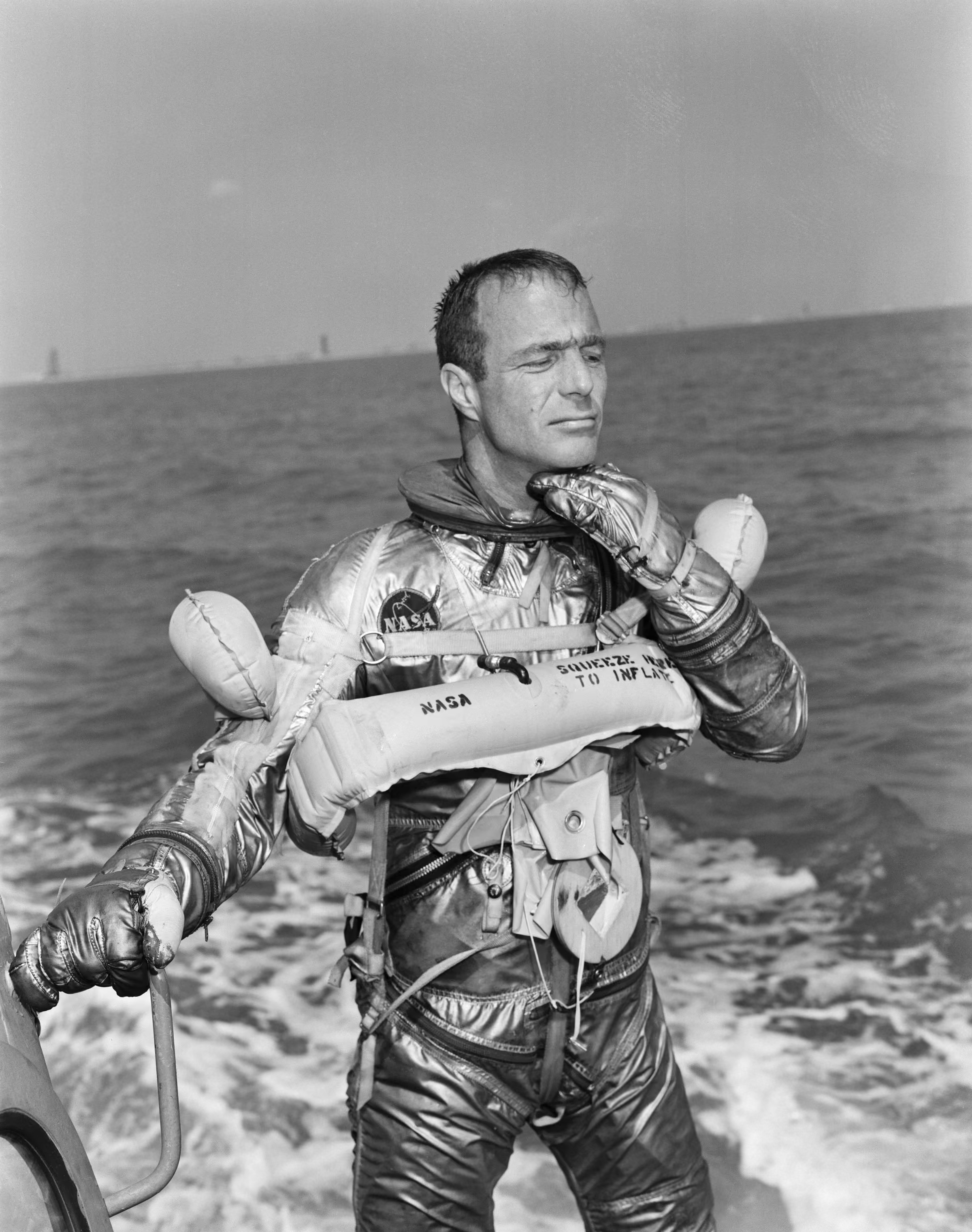
On 24 May 1962 Scott Carpenter orbited the Earth in Aurora 7 with a Breitling on his wrist. It came home damaged by the sea, after a splashdown 250 miles off target. This is the story of the first watch in space, and why "first" is more interesting than it sounds.
Photo: NASA
The series
Watches that went there
Some watches earn their reputation in a showroom. A few earned it in orbit, on the summit of Everest or at the bottom of the ocean. This series tells those stories one journey at a time, with the photographs from the day and the watch you can wear now.
We start in space, with the first watch in space to be strapped to a wrist by design: Scott Carpenter's Breitling Navitimer Cosmonaute. Every fact is from NASA, the US Navy, the Smithsonian or the watchmakers' own records, linked at the foot of the page and read on 21 October 2026.
01 · Space · Aurora 7
Three orbits, and a landing nobody planned
- 24 May 1962Launch from Cape Canaveral
- 3Orbits of the Earth
- 4h 53m 47sIn flight
- About 250 milesPast the planned splashdown
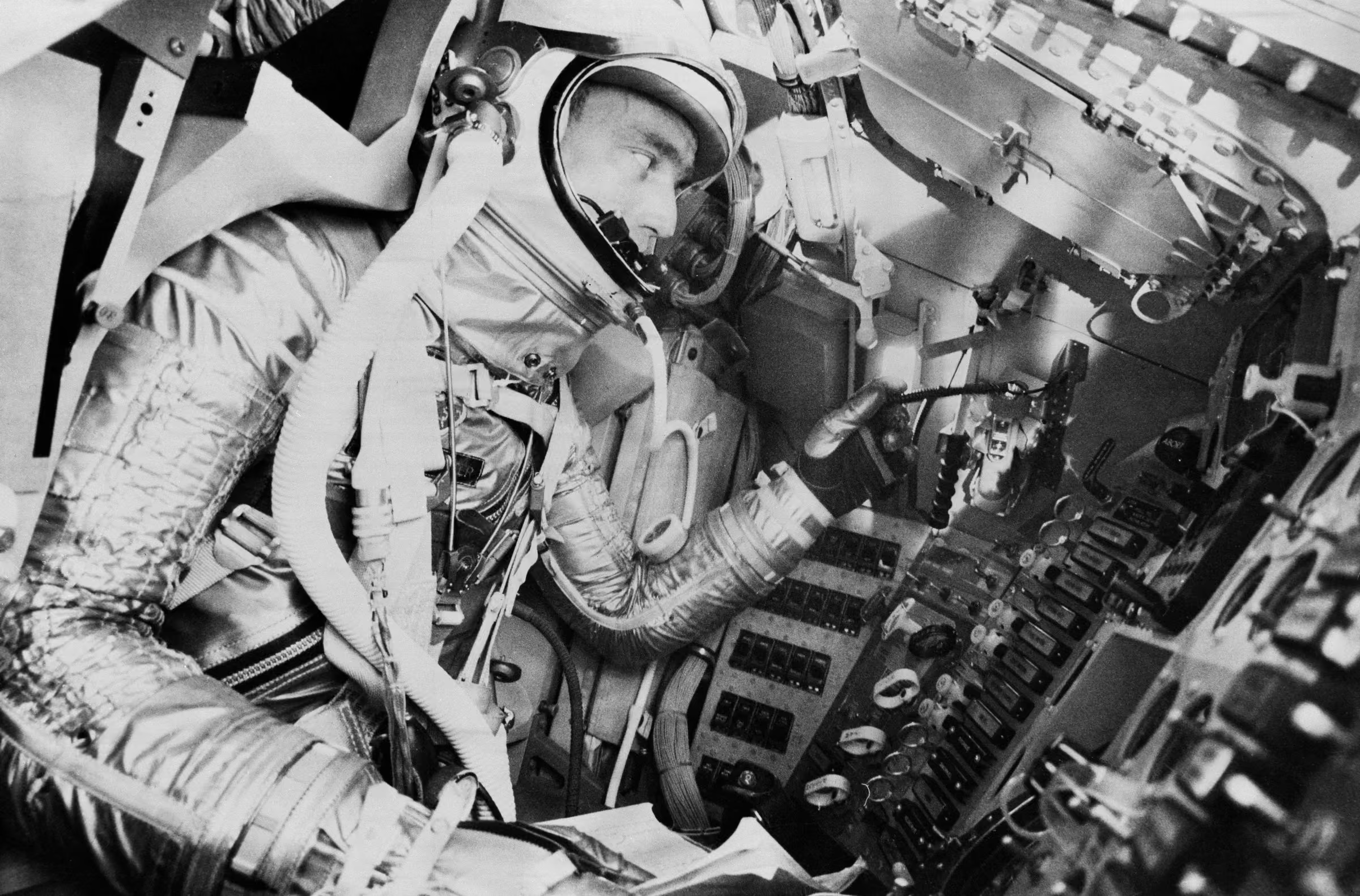
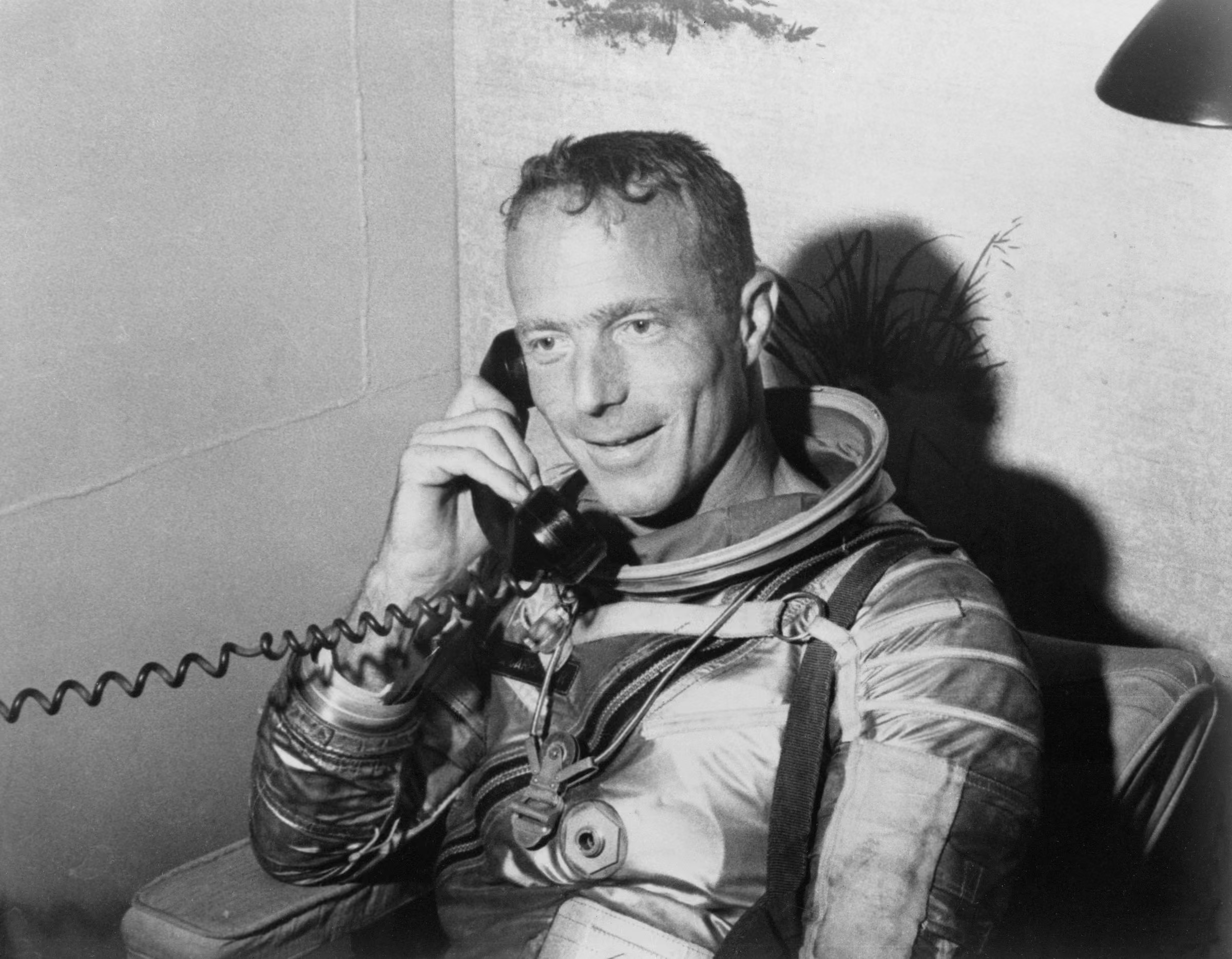
Carpenter was the fourth American in space and the second to orbit the Earth, three months after John Glenn. He launched in pre-dawn darkness from Cape Canaveral, after a 45-minute hold for fog, and flew three orbits in 4 hours, 53 minutes and 47 seconds, NASA records.
It was a working flight, packed with experiments, and it burned fuel fast. By the end of the first orbit nearly half his attitude-control fuel was gone. He also solved a puzzle from Glenn's flight: the glowing "fireflies" outside the window were ice particles coming off the capsule. He called them "frostflies".
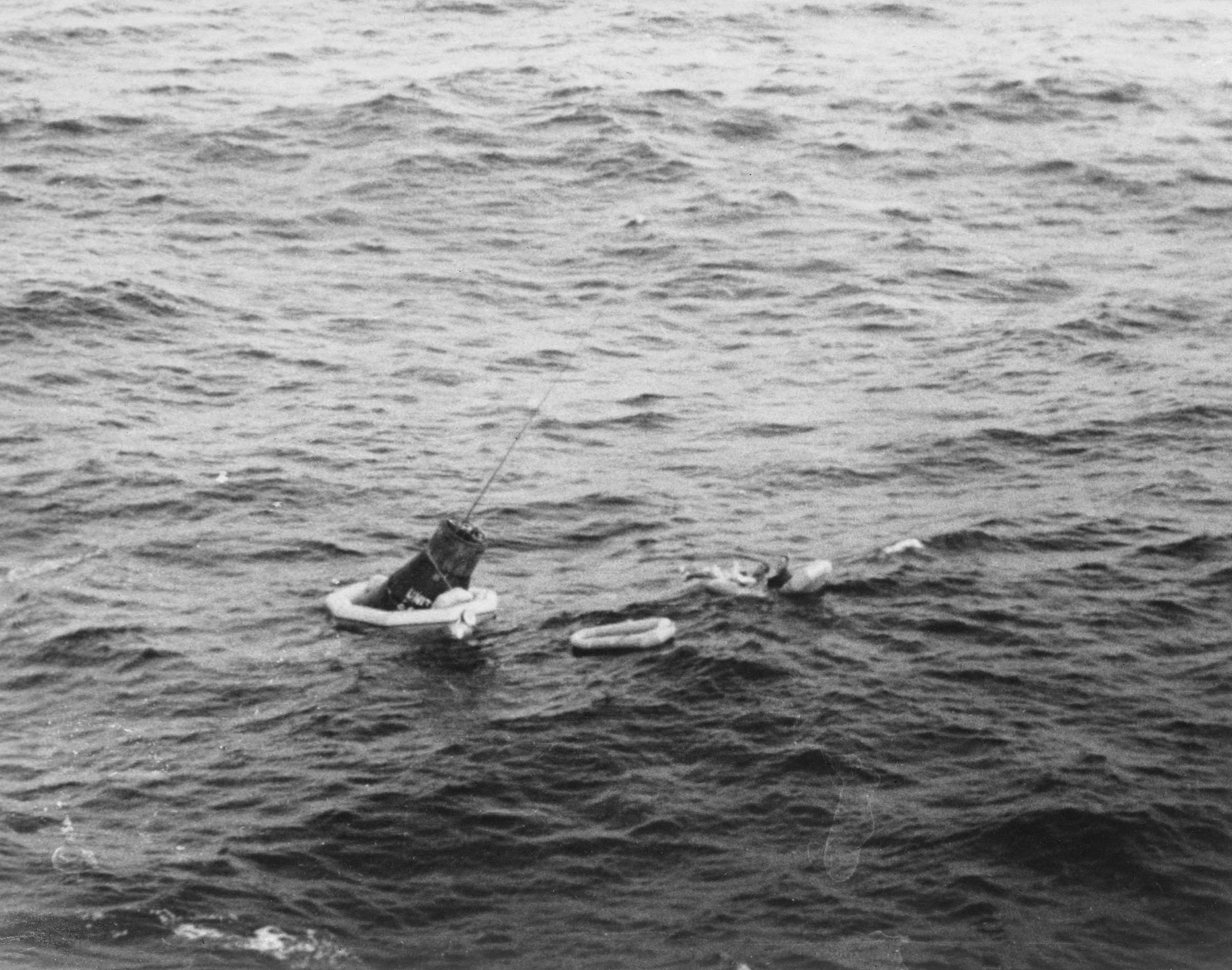
Re-entry went wrong in three small ways. The capsule was yawed 25 degrees, the retrorockets were weak and they fired about three seconds late. NASA puts the result at about 250 miles past the planned splashdown, most of it from the yaw.
The watch
A 24-hour dial, because there is no night in orbit
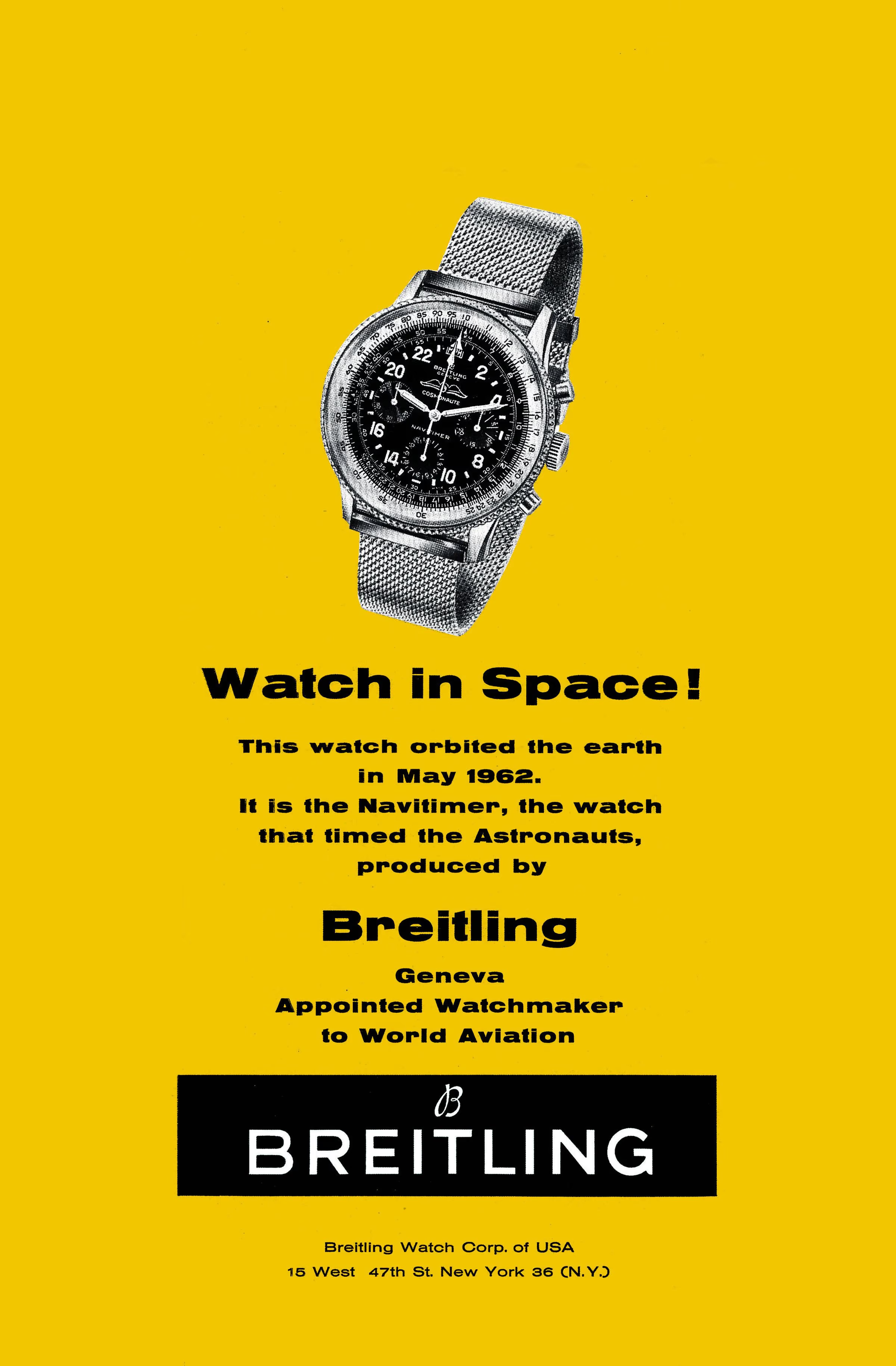
Carpenter was a naval aviator, and the Breitling Navitimer was a pilot's watch. Breitling says he asked Willy Breitling for one change: a 24-hour dial, because day and night mean little when the sun comes up roughly every hour and a half. The result was the Navitimer Cosmonaute.
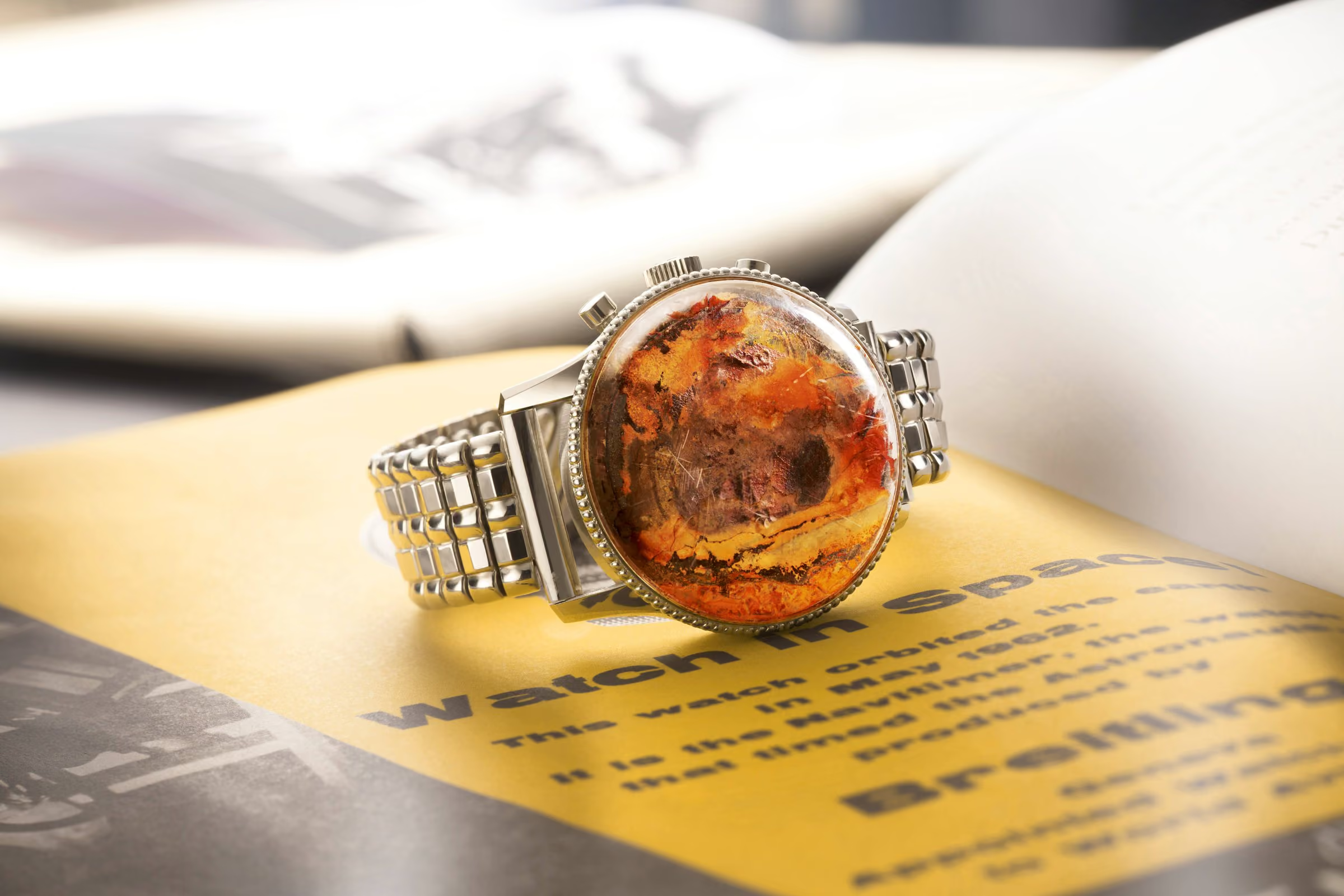
Breitling says it went round the Earth three times on Carpenter's wrist. Then came the long wait in the water, and the watch was badly damaged by seawater. Carpenter sent it back, Willy Breitling replaced it, and Breitling says the family still has the original, unrestored. That is the watch pictured here, salt marks and all.
How it works
Reading a 24-hour dial
On an ordinary watch the hour hand goes round twice a day, so 3 o'clock could be the middle of the afternoon or the middle of the night. On a 24-hour dial it goes round once. Midnight sits at the bottom of the dial and noon at the top, so a glance tells you which half of the day you are in.
On Earth the sky does that job for you. In a capsule that circles the planet every hour and a half or so, it cannot: Carpenter saw several sunrises and sunsets in a single afternoon at Cape Canaveral. The 24-hour dial keeps the day the ground is living, which is what mission control and his body clock were running on.
The same idea is why frequent flyers like GMT watches today. The extra 24-hour hand keeps home time after you land somewhere new. Our GMT watches guide explains the difference between the two kinds.
The small print
Was it really the first watch in space?
Breitling calls the Cosmonaute "the first Swiss wristwatch in space", and engraves the phrase on the caseback of today's edition. The word doing the work is "wristwatch".
Three months earlier, on Friendship 7, John Glenn carried a stopwatch made by Heuer of Switzerland. The Smithsonian, which holds it, says it was fitted with an elastic band so he could wear it on his arm. So a Swiss watch had already been round the Earth on an astronaut's arm; Carpenter's was the first made to be worn as a wristwatch.
The name everyone links with space came later. Omega says its first, Wally Schirra's Speedmaster CK2998, flew on Sigma 7 in October 1962. Its Moon landings were still seven years away.
One you'd never know: the capsule was first named Delta 7, NASA says. Carpenter renamed it Aurora, for the dawn, and, by one account, for Aurora Avenue, the street he grew up on in Boulder, Colorado.
Wear it today
The Cosmonaute now
- Reference
- RB12302A1L1P1
- Case
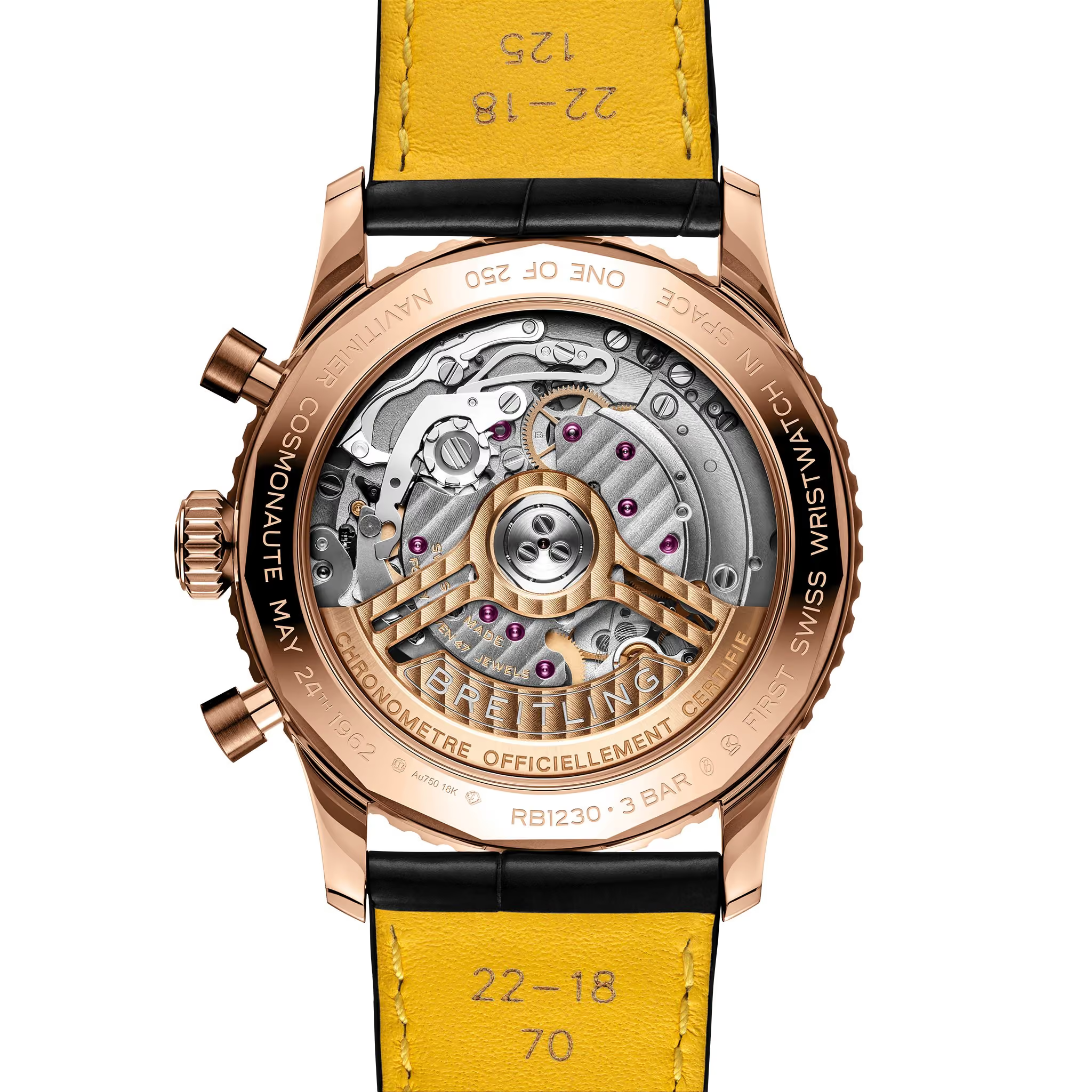
- 41mm, 18k red gold
- Movement
- Breitling B12, 24-hour, about 70 hours
- Edition
- 250 pieces
£21,950 at Breitling UK
Today's Navitimer B12 Chronograph 41 Cosmonaute keeps the 24-hour dial and puts the mission on the back: the date, the 250-piece limit and Breitling's "first Swiss wristwatch in space". Breitling sells it only through its boutiques and its own site.
There is a rarer one: the platinum Navitimer B02 Chronograph 41 Cosmonaute Scott Carpenter Centenary, at £38,700 on Breitling's UK site, both prices read on 21 October 2026. Earlier Cosmonaute reissues turn up pre-owned; our guide to buying pre-owned watches covers how to buy one safely.
Coming next in the series
The next journeys
- 02Everest, 1953The watches on the first ascentComing soon
- 03The deep seaTo the bottom of the Mariana TrenchComing soon
- 04The jet agePilots, Pan Am and the first GMTComing soon
For a watch that suits travel now, our GMT watches guide covers eight worth buying, and luxury watches for people who travel is the place to start.
Questions
The first watch in space: what people ask
What was the first watch in space?
It depends what you count. In February 1962 John Glenn carried a Swiss Heuer stopwatch on Friendship 7, fitted with an elastic band so he could wear it on his arm. In May 1962 Scott Carpenter wore a Breitling Navitimer Cosmonaute on Aurora 7, which Breitling calls the first Swiss wristwatch in space. Omega's first, Wally Schirra's Speedmaster, flew that October.
Did Scott Carpenter wear a Breitling in space?
Breitling says he did: a Navitimer Cosmonaute, which it says orbited the Earth three times on his wrist on Aurora 7 on 24 May 1962. Breitling says the watch was badly damaged by seawater after splashdown and that the Breitling family still has the original.
Why does the Navitimer Cosmonaute have a 24-hour dial?
Breitling says Carpenter asked Willy Breitling for one, because day and night mean little in orbit. A 24-hour dial goes round once a day, so you can always tell 9am from 9pm. The Cosmonaute has kept it ever since.
How much is a Breitling Navitimer Cosmonaute today?
Breitling's UK site lists the Navitimer B12 Chronograph 41 Cosmonaute, a red gold edition of 250, at £21,950, and a platinum Scott Carpenter Centenary edition at £38,700, both read on 21 October 2026. Breitling sells the limited editions through its boutiques and online.
Where sources differ on a figure, such as the length of the flight or the time to recovery, we use NASA's. Breitling's account of the watch is Breitling's; NASA's records do not mention it.