




Asia · When to go
The best time to visit Thailand, month by month
Two coasts, two monsoons and a lantern-lit full moon in the north: Thailand rewards the traveller who reads its calendar closely.
Photo: Unsplash
The short answer
When to go, in one paragraph
The best time to visit Thailand is November to February, when the cool, dry season settles over Bangkok, Chiang Mai and the Andaman coast at once. Rain eases, humidity drops and the north has cool mornings. The one exception is Koh Samui and the Gulf islands, which take their heaviest rain from October to December and are at their best from roughly June to September. March to May is hot, with Bangkok reaching 36°C in April.
- For the whole countryNov to FebCool, dry and clear from Bangkok to Phuket, with lanterns in the north in November.
- For Koh SamuiJun to SepThe Gulf stays drier while the Andaman coast takes its monsoon.
- For festivalsApr and NovSongkran from 13 to 15 April; Yi Peng and Loy Krathong on 24 and 25 November 2026.
Checked on 16 October 2026 against Travelzoo: When is the best time to visit Thailand, Experience Travel Group: When to go to Thailand and Ume Travel: Thailand Lantern Festival 2026 and 2027.
Pick your month
Turn the year
- October
- A turning month. Phuket has its most rainy days and Samui's monsoon begins, yet Chiang Mai dries out and the Similans reopen on 15 October.
- What's on
- Phuket Vegetarian Festival; Similan Islands reopen
- Prices
- Shoulder: prices begin to rise
Cool and dryHot seasonRainy season
Thailand month by month
- JanuaryCool and dry · Peak: book months aheadThe classic month. Bangkok runs around 32°C by day and 22°C at night, Chiang Mai nights fall to about 15°C, and the Andaman sea is calm. Clear skies on both the Andaman coast and in the north.
- FebruaryCool and dry · Peak: book well aheadStill superb on the beaches, and one of Koh Samui's driest months. In the north, smoke from crop burning begins to build late in the month. Chiang Mai Flower Festival; Chinese New Year in some years.
- MarchHot season · High: busy on the coastsHeat climbs to 35°C in Bangkok. The beaches remain dry and bright, but March is the worst month for burning-season haze around Chiang Mai. Long, calm beach days in the south.
- AprilHot season · High: Songkran week fills fastUsually the hottest month, with Bangkok up to 36°C and rarely below 27°C at night. Plan around Songkran from 13 to 15 April. Songkran, the Thai New Year water festival.
- MayRainy season · Low: good value returnsThe rains arrive on the Andaman side and wash the smoke from the north. Koh Samui stays hot, around 33°C, and mostly dry. Similan Islands close from 16 May; Rocket Festival in Isan.
- JuneRainy season · Low: easy to bookShowers tend to come in heavy bursts with clear spells between. A strong month to swap Phuket for the Gulf islands. Koh Samui, Koh Phangan and Koh Tao at their best.
- JulyRainy season · Low, with some summer holiday demandGreen and quiet in the north, though Chiang Mai sees only about four hours of sunshine a day. The Gulf remains the beach choice. Lush national parks and full waterfalls.
- AugustRainy season · Shoulder: UK school holiday demandAndaman seas can be rough enough to cancel island boats, and some businesses close. Chiang Mai is at its most humid. Samui is still kind. Gulf island hopping.
- SeptemberRainy season · Low: the quietest monthNationally the wettest stretch, with highs in the low 30s. Best for travellers who want lush landscapes, quiet temples and the Gulf coast. Waterfalls in full flow.
- OctoberRainy season · Shoulder: prices begin to riseA turning month. Phuket has its most rainy days and Samui's monsoon begins, yet Chiang Mai dries out and the Similans reopen on 15 October. Phuket Vegetarian Festival; Similan Islands reopen.
- NovemberCool and dry · High: Chiang Mai sells out at the full moonThe cool season returns to Bangkok, the north and the Andaman coast. Koh Samui, though, has its highest rainfall of the year now. Yi Peng and Loy Krathong, 24 to 25 November 2026.
- DecemberCool and dry · Peak: Christmas and New Year book outExcellent nationwide except the Gulf, where the rains tail off. Bangkok reaches about 31°C; Chiang Mai has about eight hours of sunshine a day. Festive season on the Andaman coast.
December · Bangkok
The river city, at a gentler pace
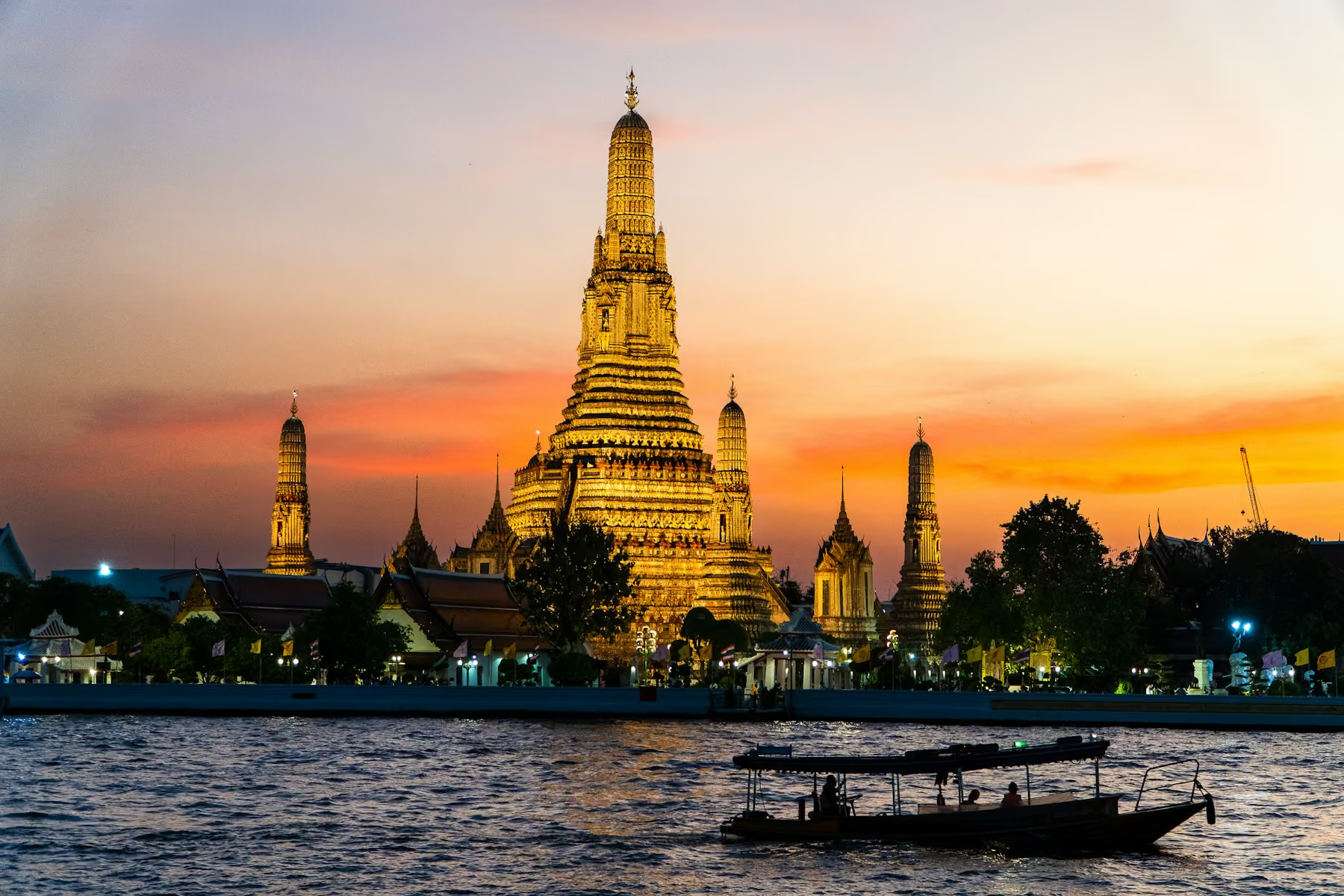
Bangkok in the cool season is a different city. December days reach about 31°C and nights drop to 22°C, which turns the Chao Phraya into something to linger over rather than escape. This is the time for long mornings at the Grand Palace, a longtail through the Thonburi canals and sundowners facing Wat Arun as its porcelain spires catch the last light. Come back in April and the same streets sit at 36°C, with nights that rarely dip below 27°C. Book a riverside suite, use the hotel boats, and the city's traffic barely touches you.
Plan temple visits for early morning and the riverbank for late afternoon. Midday is for the pool or a long lunch, even in the cool season.
November to April · Phuket and Krabi
The Andaman in its glass season
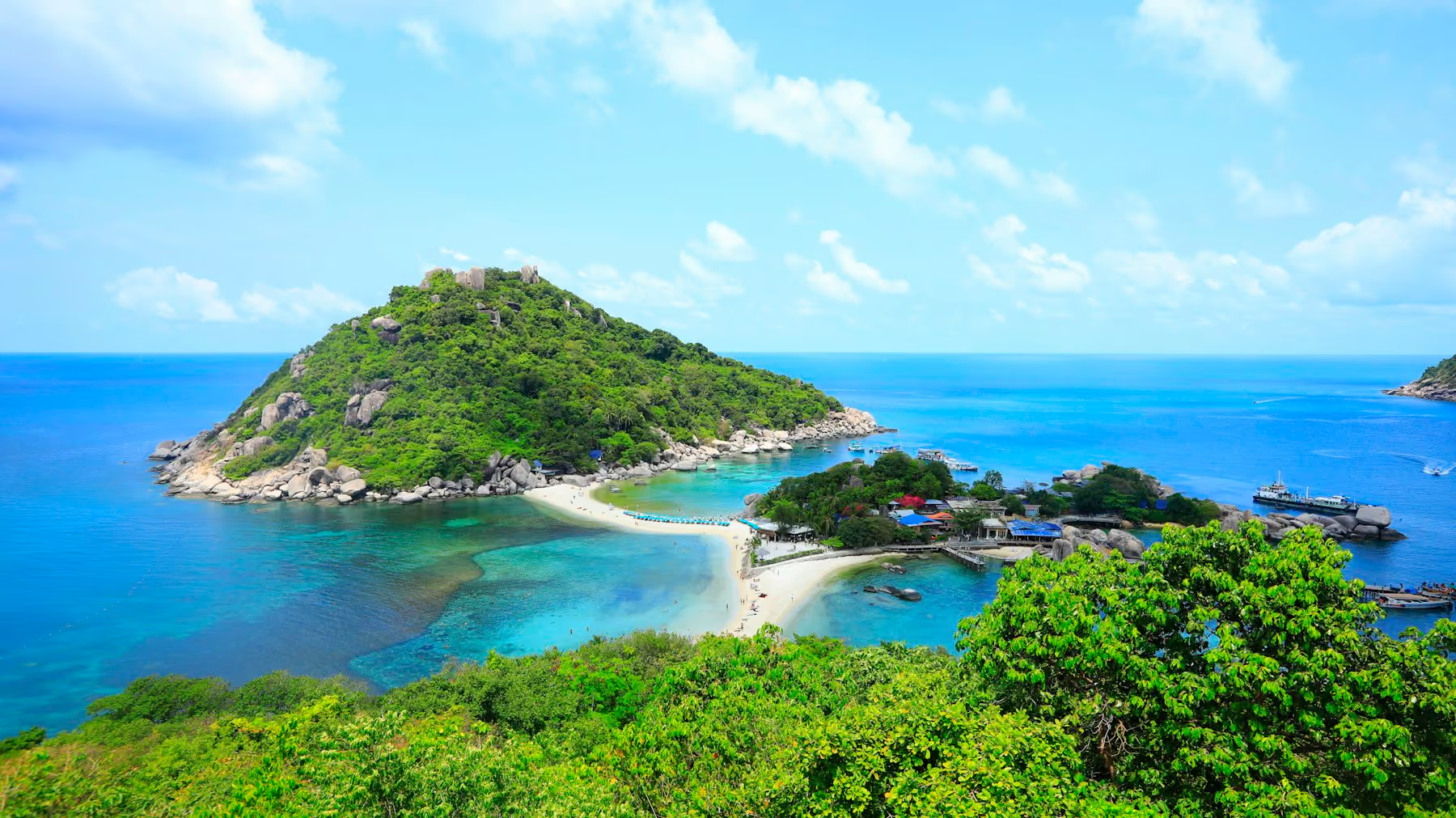
From November to April the Andaman coast is hot, clear and calm, and this is when Phuket, Krabi and Phang Nga Bay look the way you imagine them. Limestone karsts rise from flat turquoise water, and boat days to Phi Phi or the outer islands run reliably. The Similan Islands, the region's finest diving, reopen each year on 15 October and close on 16 May to let the reefs recover. Come in August and the picture changes: rough seas can cancel boats and some businesses close for the season.
The Similans now use a mandatory e-ticket system, so ask your hotel to book your boat and park entry together, early.

June to September · The Gulf
Koh Samui keeps its own calendar
The Gulf of Thailand runs on a different clock. While the Andaman takes its monsoon, Koh Samui, Koh Phangan and Koh Tao are usually at their best from June to September, with hot, mostly dry days. The trade comes later: October brings rain on about two days in three, November is the island's wettest month with rough seas, and December is the tail end. February is among its driest months. For a summer escape from the UK, this is the side of Thailand to choose.
If you are combining coasts, pair Samui with Bangkok in July or August, and save Phuket or Krabi for a winter trip.
November · Chiang Mai
The night the sky fills with lanterns
Yi Peng is the Lanna north's festival of light, held on the full moon of the twelfth lunar month alongside Loy Krathong. In 2026 Yi Peng falls on 24 and 25 November, with Loy Krathong on the 25th; in 2027 the dates move to 13 and 14 November. Lanterns rise over the Ping River, krathongs float downstream and temples across the old city mark the full moon. Release lanterns only on the permitted nights, as fines are steep. The ticketed Mae Jo release north of the city is the grand set piece, but the riverbanks are free.
Hotels in Chiang Mai fill up for festival week. Book as soon as your dates are set, and avoid February to April if you want clean mountain air.
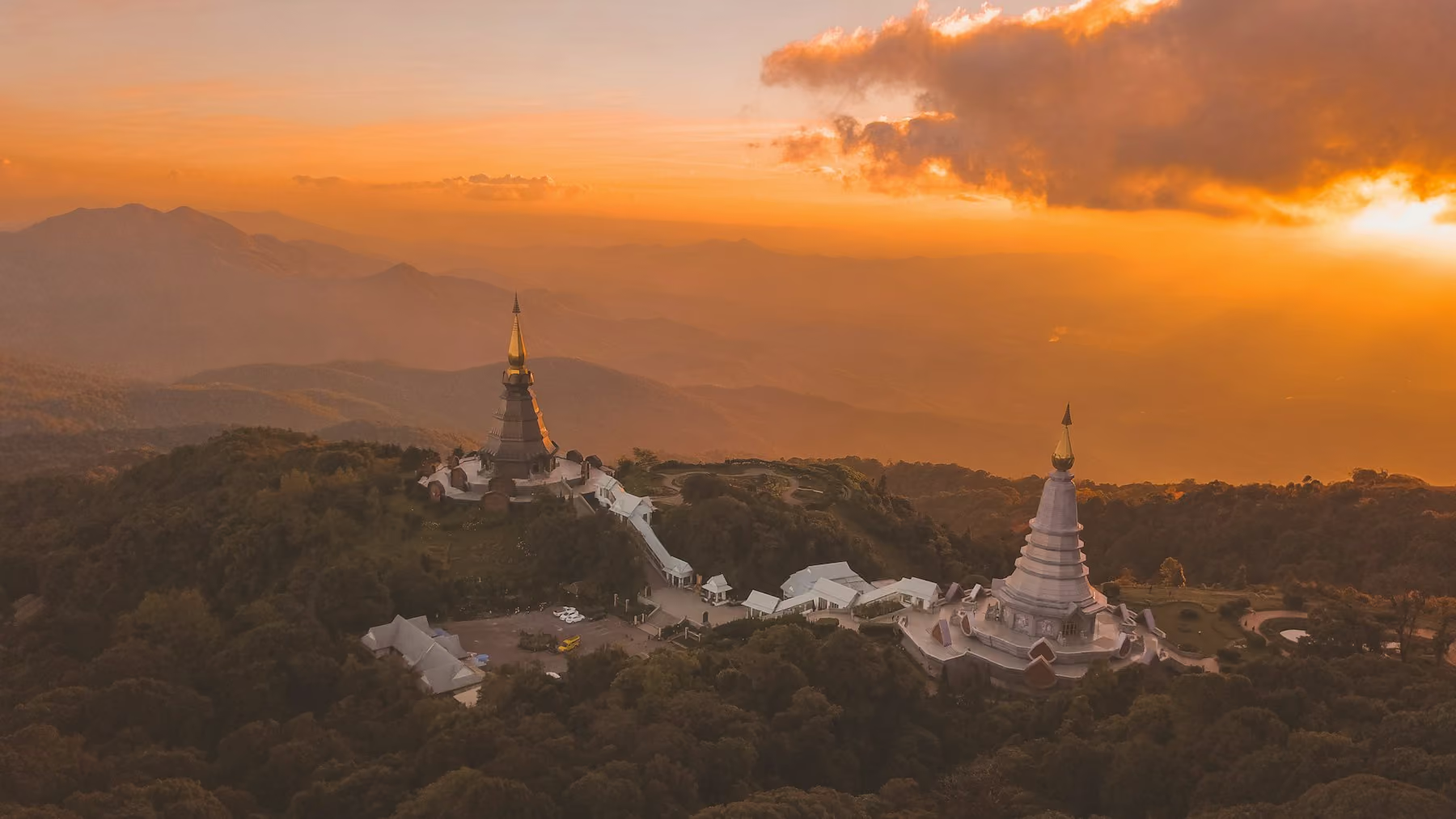
13 to 15 April · Nationwide
Songkran, the soaking New Year
Songkran marks the Thai New Year from 13 to 15 April, and in 2026 it ran Monday to Wednesday, with Bangkok's celebrations starting from the evening of Friday 10 April. Silom Road becomes about five kilometres of water fight, and Siam Square has a foam party feel. The festival also has a quieter heart: in the mornings, families visit temples to pour scented water over Buddha images. It falls in the hottest month, so the soaking is welcome, but expect busy roads, full flights and few dry moments outdoors.
Pack a waterproof phone pouch and wear clothes you are happy to get wet. If you want calm, base yourself at a resort and join in for an afternoon.
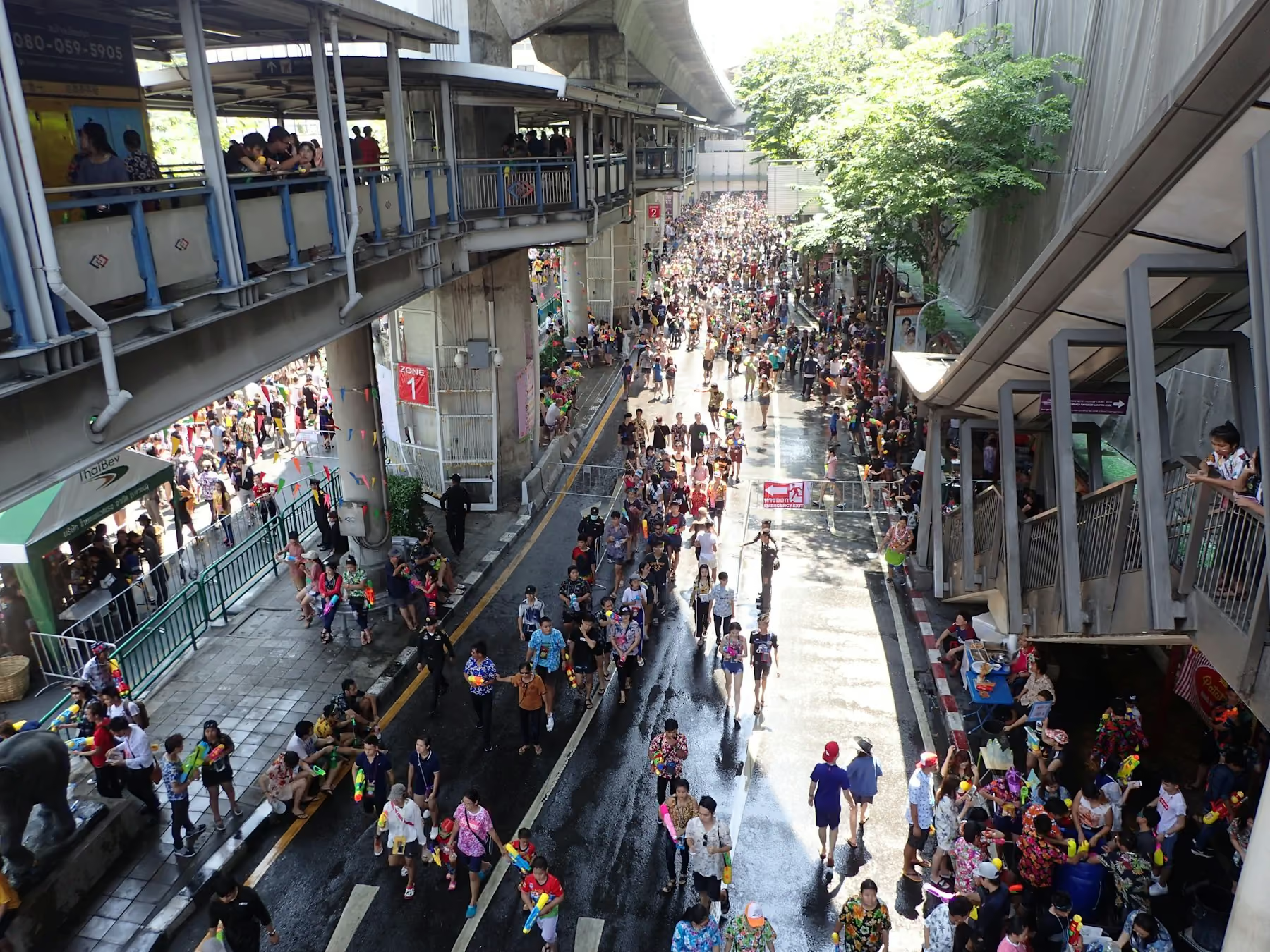
- 11h 55m
- London Heathrow to Bangkok, non-stop
- 36°C
- Bangkok's April highs, the hottest month
- 15 Oct
- Similan Islands reopen for the season
- 25 Nov
- Loy Krathong 2026, on the full moon
Planning the trip
Where to go, how long, and how to get there
Thailand rewards a two-part trip: a city or the north first, then a coast chosen by the month. Ten days to two weeks is enough for Bangkok, Chiang Mai and one beach. Pick your coast by season, not by reputation, and book the peak months early.
- November to FebruaryThe grand tourThree nights in Bangkok, three in Chiang Mai and a week on the Andaman coast. Every region is in good shape at once, which is why this is the best time to visit Thailand for a first, wide-ranging trip. Expect peak demand across the board.
- June to SeptemberThe Gulf summerBangkok, then Koh Samui and a day trip or two around the Gulf islands. The Andaman is wet and often rough, but Samui is usually at its best, and the north is lush and green. Low season prices elsewhere help balance a Gulf island stay.
- Late NovemberLanterns and beachesTime Chiang Mai for the full moon, when Yi Peng and Loy Krathong light the Ping River, then fly south to Phuket or Krabi as the Andaman dry season gets going. Book Chiang Mai first, since the city fills for festival week.
- Early to mid AprilSongkran and the seaJoin Songkran in Bangkok or Chiang Mai from 13 to 15 April, then cool off on the Andaman coast while it is still dry. It is the hottest month, so choose hotels with good pools and shade.
Getting there
EVA Air and Thai Airways fly non-stop from London Heathrow to Bangkok Suvarnabhumi, with schedules listing around 11 to 12 hours. Thai runs two daily flights and EVA one. From Bangkok, short domestic hops reach Chiang Mai, Phuket, Krabi and Koh Samui, so a two-region trip loses little time to travel.
How long to stay
Ten nights covers Bangkok and one beach without rushing. Two weeks lets you add Chiang Mai, and three allows both coasts if your dates suit both, such as April. Allow a full day to recover from the overnight flight before booking anything strenuous, and leave a buffer night in Bangkok before the flight home.
Booking and prices
December, January and the Chiang Mai full moon in November are the hardest to book, so secure flights and suites months ahead. May to September is the low season on most of the country, with the best value outside the Gulf islands. Songkran week and UK school holidays bring their own spikes.
Questions people ask
The best time to visit Thailand, answered
What is the best time to visit Thailand?
November to February is the best time to visit Thailand for most trips. It is the cool, dry season in Bangkok, the north and on the Andaman coast around Phuket and Krabi. The exception is Koh Samui and the Gulf islands, which are wettest from October to December and usually best from June to September.
When is the rainy season in Thailand?
Broadly May to October, with September and October the wettest months nationally. Rain usually comes in heavy bursts with clear spells between rather than all day. The Gulf coast is different: Koh Samui's heaviest rain falls from October to December, with November the wettest month of its year.
When is the best time to visit Koh Samui?
Koh Samui is usually at its best from June to September, when the Andaman coast is in its monsoon. February is also among its driest months. Avoid October to December if you can: October brings rain on about two days in three, and November has the island's highest rainfall and rough seas.
When is the Chiang Mai lantern festival in 2026?
Yi Peng falls on 24 and 25 November 2026, with Loy Krathong on 25 November. Both follow the full moon of the twelfth lunar month, so dates shift each year; in 2027 they fall on 13 and 14 November. Lanterns may only be released on the permitted nights, and hotels book up early.
Should I avoid Chiang Mai in the burning season?
If air quality matters to you, yes. Smoke from forest fires and crop burning builds from February, is worst in March and lingers into April, until the May rains clear it. On 1 April 2026 Chiang Mai's AQI reached 235. Visit the north from October to January instead.
How long is the flight from London to Bangkok?
Non-stop flights from London Heathrow to Bangkok Suvarnabhumi take roughly 11 and a half to 12 hours, with schedules listing up to 11 hours 55 minutes. EVA Air and Thai Airways fly the route direct. Connecting flights via the Gulf or other hubs take longer but widen your choice of cabins.
Keep exploring
- Where to stayThailand: the shortlist16 hotels, each one recognised by named judges.
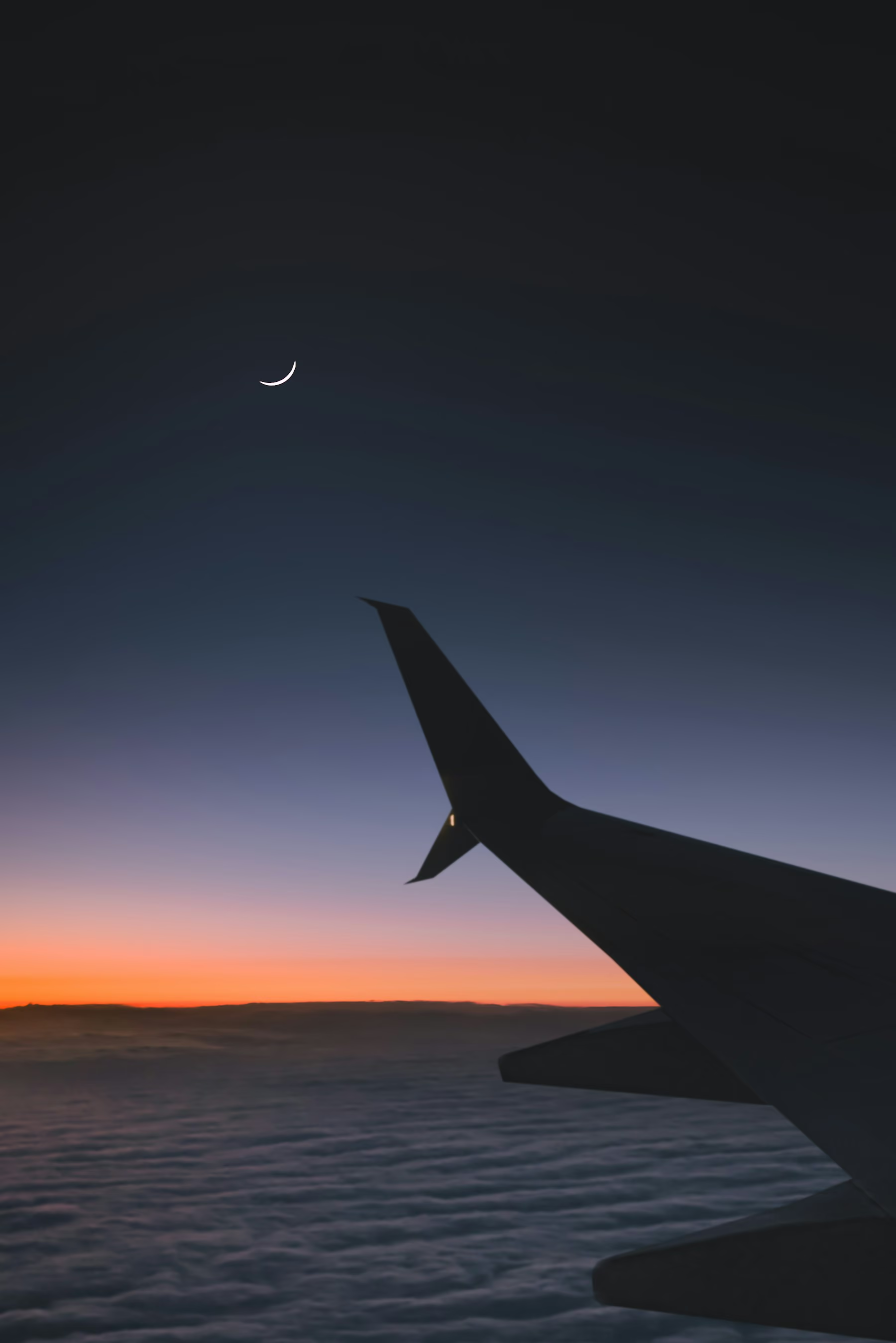 The journey · FlightsEmirates business classFrom the car at your door in London to the lights of Dubai, in ten moments.
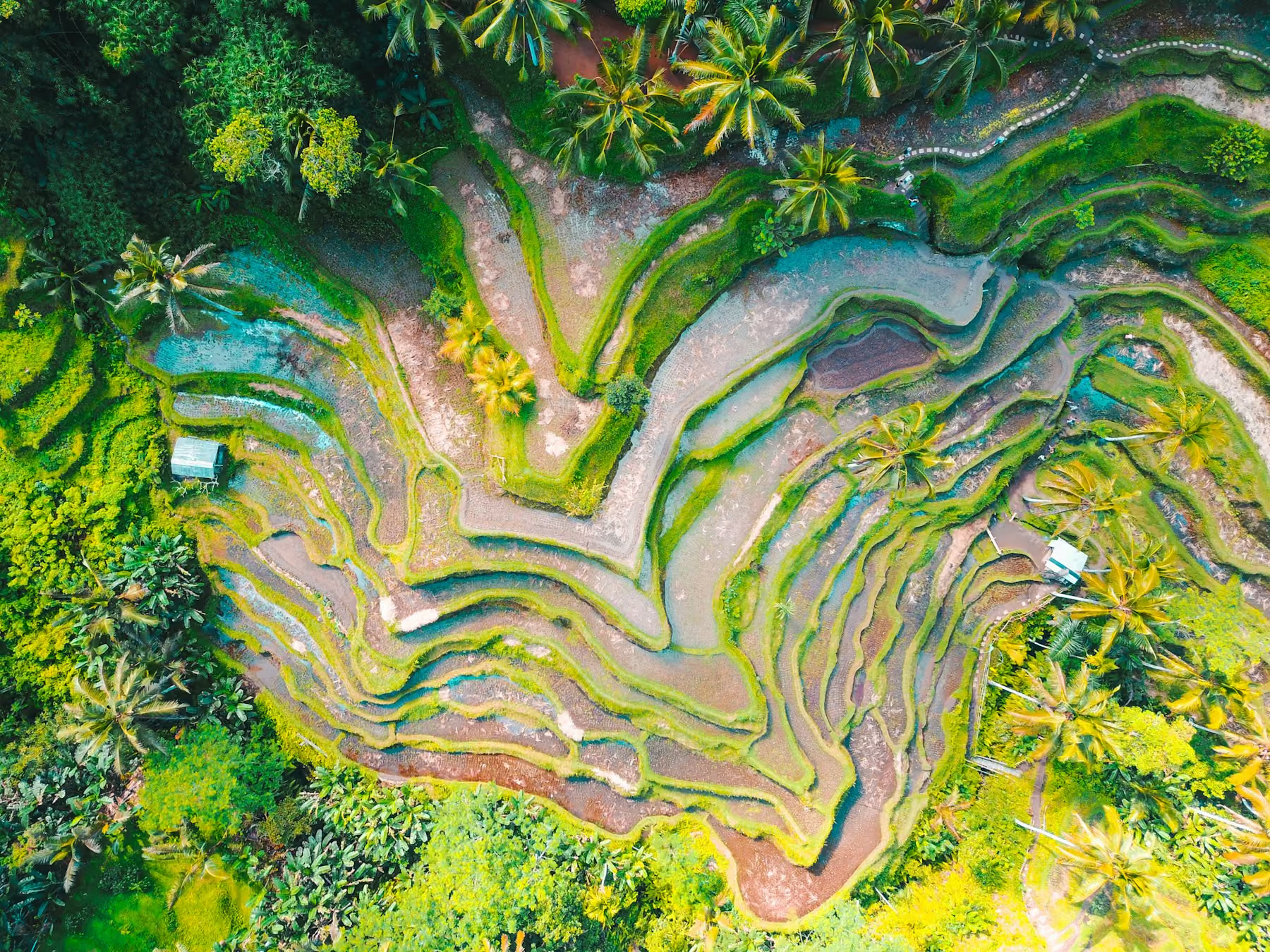 Pair it withBali, month by monthAt its best: Jun, Jul, Aug, Sep.
 Where to stayBali: the shortlist23 hotels, each one recognised by named judges.