
What it costs
Premium Economy vs Economy on Long Haul: Is the Upgrade Worth It From the UK?
Premium economy vs economy on long haul from the UK: worth the upgrade on flights over eight hours when the gap is under £400 to £600 each way. The seat, the sleep and the price maths, route by route.
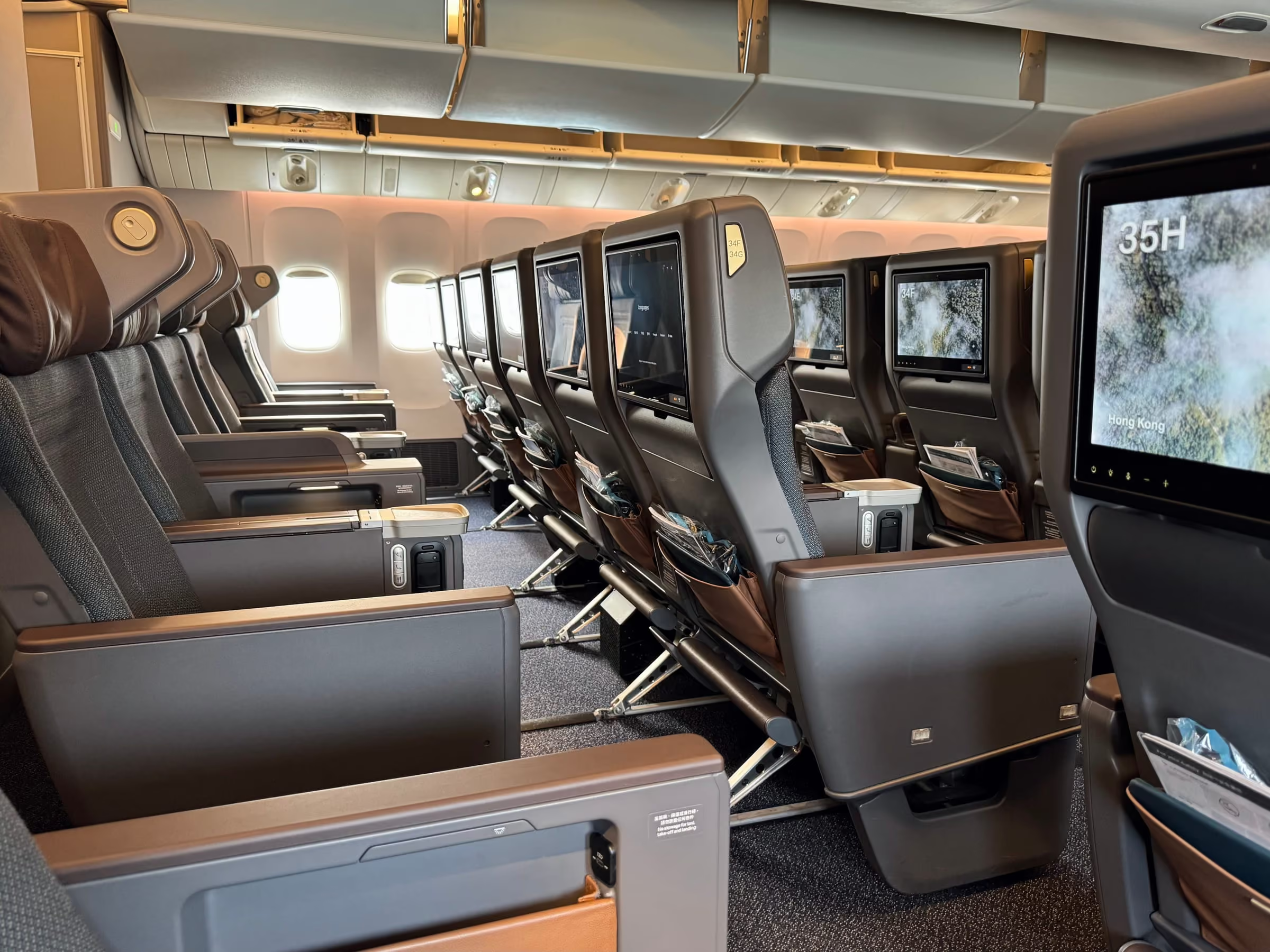
On a ten-hour overnight from Heathrow to Singapore, I sat in row 42 centre and watched the woman two rows ahead in premium economy recline into a proper footrest and disappear under a duvet. That is the decision in miniature. The debate over premium economy vs economy long haul comes down to this: upgrading on a long-haul flight is worth it for journeys over eight hours if you value sleep, space or arriving without two days of recovery, but only when the price gap is below roughly £400 to £600 each way, which it often is if you move quickly on an upgrade offer.
Is premium economy worth it for a long haul?
For most travellers on routes of eight hours or more, yes, with caveats. The core difference is physical: standard long-haul economy seats run to a pitch of around 30 to 32 inches and a width of 17 to 18 inches. Premium economy typically delivers 38 to 44 inches of pitch, 18 to 19.5 inches of width, a more aggressive recline and, on most carriers, a proper calf-rest and footrest. That is not a marginal gain on a twelve-hour crossing; it is the difference between arriving stiff and arriving functional.
British Airways World Traveller Plus between London and JFK, checked in May 2024, was sitting at £1,100 to £1,400 return against economy fares from £550 to £700. On that specific route, just under seven and a half hours, the premium is harder to justify unless you are travelling for work and need to perform on arrival. For ten-plus hours to South Africa, Australia or Japan, the maths shifts. The seat and the footrest earn their keep.
The benefits extend beyond the seat. A dedicated check-in area, a larger baggage allowance (British Airways grants 23 kg checked plus a 23 kg second bag in World Traveller Plus versus one 23 kg bag in economy), priority boarding and improved meal service are all standard on full-service carriers. None of those tips the decision on their own; collectively, they raise the floor of what a long-haul day looks like from first alarm to hotel check-in.
Where premium economy genuinely fails to deliver is on overnight short-hops to Europe or on ultra-low-cost long-haul operators where the product is thin and the premium is still steep. On those, economy with a well-chosen seat, exit row, bulkhead, closes most of the gap at a fraction of the price.
For those considering stepping up further, our piece on First Class vs Business Class Long Haul: Is the Upgrade Worth It? covers the next tier, where flat beds and suite doors enter the picture.
How much is it usually to upgrade from economy to premium economy?
The figure shifts depending on carrier, route and how far in advance you book, but the working range from UK airports is roughly £200 to £800 each way for a purchased upgrade at point of sale. Bidding schemes and last-minute cash offers regularly come in below that. British Airways' upgrade auction, for instance, sometimes clears at £150 each way on transatlantic routes when the premium cabin is undersold within 72 hours of departure.
On longer routes, London to Sydney, London to Tokyo, the premium narrows proportionally. A Qantas economy fare to Sydney in October 2024 was available around £950 return; premium economy on the same dates sat at roughly £2,100, a gap of £1,150 for a 21-to-22-hour journey split across two flights. Per hour of flying that works out at around £26 extra per hour, which is close to the generally quoted market valuation of premium economy comfort.
Emirates charges differently by class configuration rather than simple route length. On the A380 between Heathrow and Dubai, a six-and-a-half-hour flight, premium economy (introduced on selected aircraft in 2023) was running at around £600 return versus £380 economy in mid-2024. That is a hard sell for under seven hours. For context on what the Emirates cabin hierarchy looks like further up, our Emirates A380 Business Class Review covers the step above.
Upgrade fees paid at check-in or via an airline's bid system are not ATOL-protected in the same way that a package holiday is, because they are ancillary charges rather than a primary travel booking. If you are purchasing a premium economy ticket outright as part of a package, check that your operator holds an ATOL licence issued by the UK Civil Aviation Authority, which protects your money if the operator fails before or during travel. The FCDO foreign travel advice pages are the other first stop before booking any long-haul route, covering entry requirements and any current travel alerts.
Points and miles can close the gap meaningfully. Avios redemptions in British Airways World Traveller Plus from London to New York run at 34,000 Avios each way in off-peak periods versus 26,000 in economy, a difference of 8,000 Avios, which is roughly £80 at conservative valuations. That is, bluntly, one of the best-value uses of Avios in the programme.
Do you sleep better in premium economy?
Better than in economy, yes. Not as well as in business class, and nowhere near a flat bed. That is the honest answer, and the distance between those three states matters for how you frame the buying decision.
The footrest is the single most significant sleep aid in premium economy. Raising your legs to near-horizontal means you can find a position that holds across a few hours rather than shifting every twenty minutes. On British Airways World Traveller Plus and Virgin Atlantic Premium, the calf-rest extends automatically with the recline, which matters on a dark cabin at 35,000 feet over the Atlantic. Economy seats without a footrest tend to leave your legs at an angle that wakes you after an hour or two.
Seat width plays into this too. At 18 to 19.5 inches you are not touching your neighbour at the shoulder when you shift position, which economy centre seats at 17 inches rarely allow. On a 777 configured in a 3-3-3 economy layout, the middle seat is the worst place to attempt sleep on the planet. Premium economy, almost universally configured in a 2-4-2 or 2-3-2 layout, gives window seats a wall to lean against and aisle seats a clear side to tilt.
What premium economy does not give you is horizontal. A business-class flat bed, from around 60 to 80 inches of pitch on carriers like Qatar Airways in Qsuite, converts fully. Premium economy reclines to perhaps 120 to 135 degrees, which is meaningful but not the same thing. If you are flying London to Auckland (roughly 24 hours with a connection) and sleep is the primary mission, business class is the honest answer. If Auckland return in business class costs £5,000 more than premium economy and your budget is fixed, premium economy with a window seat, a neck pillow and a melatonin tablet is a reasonable second.
Why not wear jeans on a plane?
Jeans on a long-haul flight are simply uncomfortable in a way that compounds over hours. A stiff denim waistband that sits fine at a dinner table becomes a pressure point across a ten-hour sector, particularly when seated in a partly reclined economy or premium economy seat. The fabric has almost no give, which means any position you shift into on a long haul still involves the same rigid seam at the hip.
There is also the temperature variable. Aircraft cabins run cold, most long-haul cabins are kept between 18 and 24 degrees Celsius, and denim, while insulating, is heavy and slow to adjust when the cabin warms after boarding. Lightweight chinos, travel trousers with stretch fabric, or soft joggers manage the temperature range more efficiently across a twelve-hour flight without the structural stiffness.
Dress codes in premium economy and above are not enforced the way they once were, but presentation does matter for upgrade bids and at airline lounges, where smart-casual is the operative standard. A pair of well-cut travel chinos passes every context jeans might reach for, and lands you at arrivals looking like you meant to be there.
The practical note for premium economy specifically: the seats recline further than economy, so the waistband issue is more pronounced as you move the seat back. Travellers in premium economy on twelve-hour sectors and wearing rigid jeans almost universally end up with the button undone before hour four. That is the argument the wardrobe decision reduces to.
When the upgrade is and is not worth it: a route-by-route view
The honest framework is flight duration versus price gap. Under six hours, economy wins almost every time, short-haul long-haul hybrids like London to Nairobi or London to Cairo do not justify a £500 premium seat when the flight ends before your body registers what it has lost. Six to nine hours is the contested zone: London to the east coast of the US, London to West Africa, London to the Gulf. Here, premium economy earns its keep on overnight departures but is harder to justify on morning flights where you arrive early afternoon and can function on adrenaline.
Beyond nine hours, London to South and Southeast Asia, sub-Saharan Africa, Australia, Japan, premium economy is worth every penny of a reasonable price differential. On a Heathrow to Bangkok route running roughly eleven and a half hours, a £350 to £500 gap between economy and premium economy is defensible for any adult traveller who needs to function on arrival. At £800 or more, the calculation tips toward either staying in economy with a chosen exit-row seat or pushing budget toward business class.
Solo travellers have an additional lever: economy exit rows. A 34-inch pitch exit row on a 787, booked for £30 to £60 extra at seat selection, closes about half the physical gap with premium economy at a fraction of the cost. Travelling as a couple, the exit row option often disappears because you cannot guarantee adjacent seats. Premium economy's 2-2 or 2-3-2 configuration then becomes worth considerably more.
For journeys that push the extremes, ultra-long-haul to Australia or South America, the question of whether business class is the better leap is worth examining. Our piece on What You Actually Get in First Class That Business Class Doesn't Have maps out what each tier above premium economy delivers, which helps calibrate whether the next jump makes sense for a given budget.
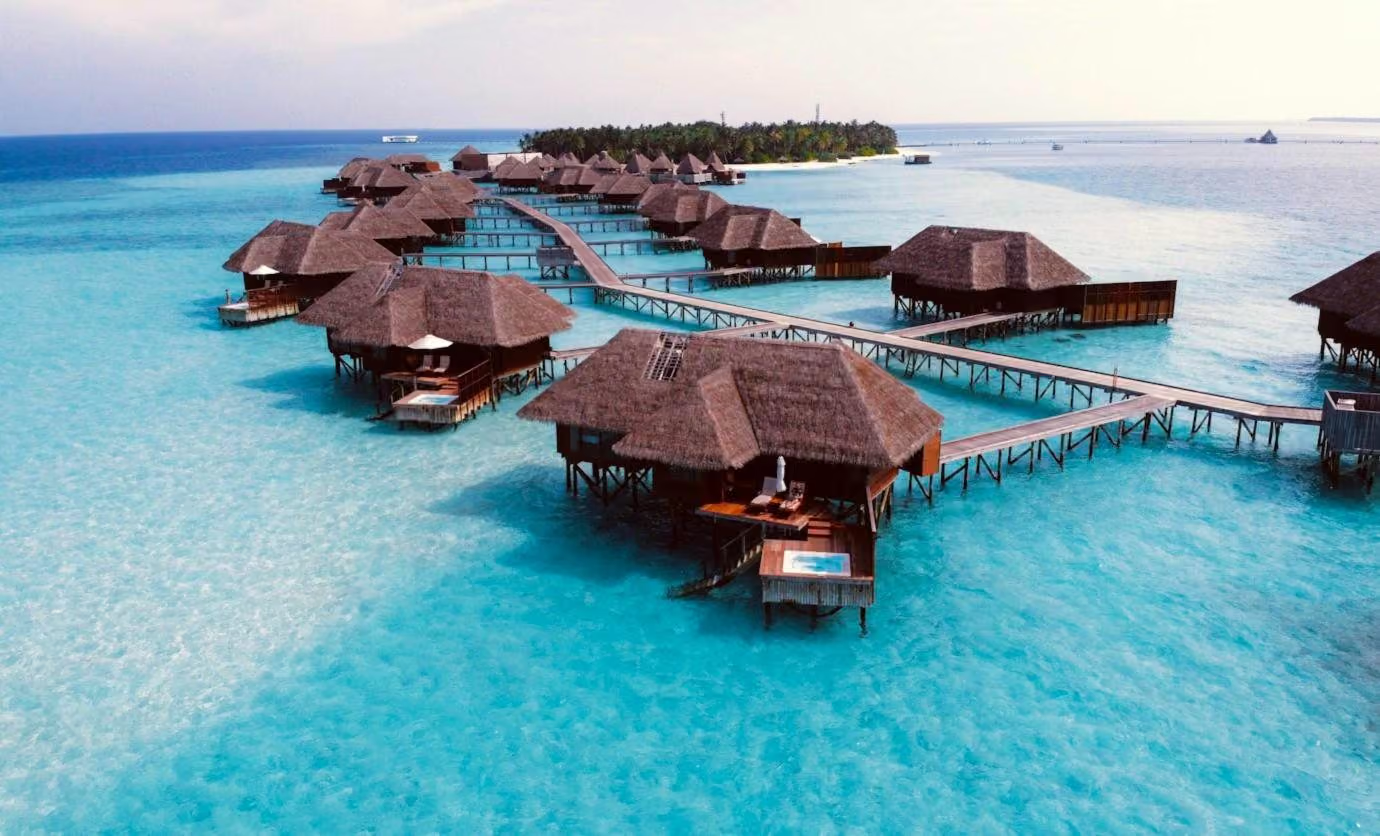
One place where premium economy frequently represents exceptional value is the Maldives in peak season. Flights to Malé run nine to ten hours from Heathrow, and the difference between economy and premium economy on British Airways or Qatar Airways often narrows to £250 to £350 each way when purchased several months out, a figure that looks reasonable against the resort spend that follows. For timing detail on the destination itself, see our guide on when to visit the Maldives.
The upgrade call ultimately comes down to three numbers: the hours in the air, the price of the gap and how much you value the morning after. At £30 per hour of additional comfort, a rough market rate, a ten-hour flight justifies £300 in premium economy over economy. Most airline pricing sits close to that range if you catch it early or bid smartly within 72 hours of departure, which makes the upgrade rational far more often than travellers assume going in.