



What it costs
The Cheapest Ways to Book Emirates Business Class From the UK: Fares, Miles and Timing
How to book Emirates business class cheapest from the UK: the months and days that price lowest, when a consolidator beats emirates.com, and how upgrade bids and miles change the maths.
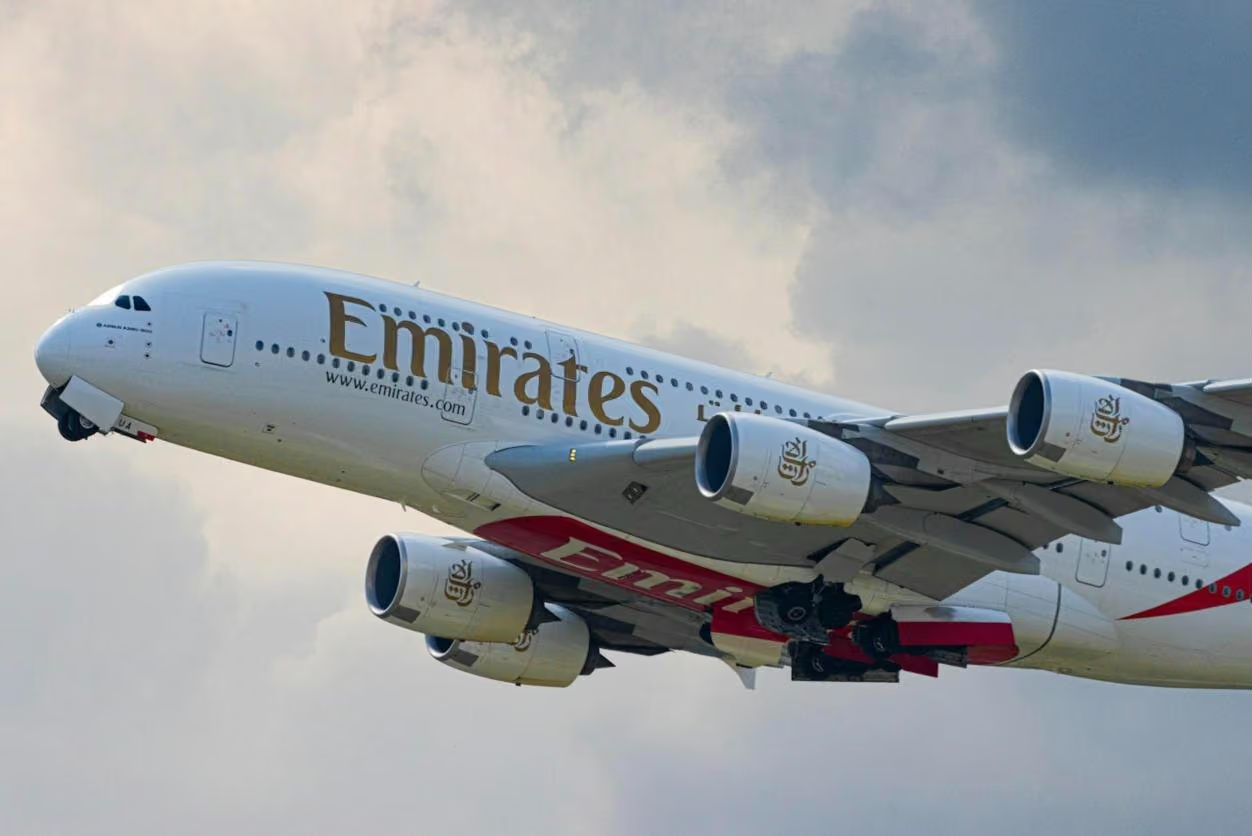
The cheapest way to book Emirates business class from the UK is to target Special or Saver fares on emirates.com in June or January, when London Heathrow to Dubai returns can fall to around £1,420, or to submit an upgrade bid through the Emirates app after an economy booking. Specialist UK consolidators regularly undercut the airline's own published prices by £100 to £300 on routes to Dubai, Bangkok and Colombo, and a mid-week departure shaves further still. To book Emirates business class cheapest, combine at least three of these levers: the right month, the right departure day, and a consolidator or bid rather than a walk-up fare.
None of these methods suit every traveller equally. A Saver fare carries a USD 50 change fee and suits anyone with fixed dates; the bid upgrade is the right move if you have already bought economy and want the flat bed without committing to a full cabin price upfront. What follows covers each route with honest numbers at every step.
What is the cheapest way to upgrade to business class on Emirates?
The cheapest entry point from an existing economy booking is the Emirates Upgrade Bid programme: you submit a cash offer after ticketing and pay only if accepted. Bids on London Heathrow to Dubai (EK003/EK004, roughly seven hours) have cleared for as little as £200 to £350 per person on quieter midweek departures, though peak-season offers on the same route often need £500 or more to land.
Emirates emails bid invitations between booking and 24 hours before departure. The submission window opens roughly 96 hours out. You set a minimum and a maximum, and the airline fills unsold Business Class seats from highest to lowest offer. Tuesday and Wednesday departures consistently clear at lower prices than Friday or Sunday, where leisure demand pushes the floor up.
Using Emirates Skywards miles to upgrade
Skywards members can upgrade with miles rather than cash, and this is frequently the better deal when you hold a surplus. A one-way upgrade from Economy Saver to Business Class on EK003 (LHR–DXB) costs around 18,000 Skywards miles plus a co-pay of roughly USD 100 in taxes. Earning those miles without flying is possible: Emirates has credit card partnerships via Barclaycard, and Skywards miles can be transferred from American Express Membership Rewards, though buying miles outright at approximately USD 30 per 1,000 rarely makes financial sense against the upgrade value.
If you are starting from zero miles, the bid programme is almost always faster than accumulating points from scratch.
The check-in desk upgrade: still real, rarely cheap
Emirates does occasionally sell surplus Business Class seats at Heathrow Terminal 3 for a last-minute cash price, but it typically represents the full flexible Business fare minus whatever you paid for economy, often £1,200 or more one-way. The bid programme has largely replaced this as the airline's preferred mechanism for clearing unsold premium seats, and it cannot be counted on with any reliability.
One regulatory point worth knowing: the UK Civil Aviation Authority confirms that once an upgrade bid is accepted, your original ticket's refund and change conditions are superseded by the Business Class fare rules. On a Saver fare, that means a USD 50 change fee applies, not the economy terms you started with.
On the A380, a successful upgrade moves you into a forward cabin with lie-flat seats, access to the onboard bar on the upper deck, and a cabin crew ratio that is noticeably different from the main cabin. Our Emirates A380 Business Class review covers seat dimensions, bar hours and meal service in full if you want to know exactly what you are bidding for before committing. On a seven-hour overnight LHR–DXB sector, the flat bed alone tends to justify the lowest cleared bid prices.
Submit your bid as early as the invitation arrives, roughly 96 hours before departure. Waiting until 48 hours out does not improve your odds; by that point other bidders have already committed. Aim slightly above the programme's displayed minimum: bids placed at or near the slider's floor almost never clear on routes departing London. On LHR–DXB departures in June, cleared upgrade bids have historically been lower because more seats sell outright at discounted fares that month, leaving fewer premium slots to fill via bidding. January and September, by contrast, tend to produce tighter inventory and higher clearing prices.
What is the cheapest way to book Emirates business class tickets?
To book Emirates business class cheapest, use a specialist consolidator or flight search tool to find discounted inventory, buy at least three months ahead, and fly in a low-demand window such as June or early September. A return London to Dubai can be found for around £1,400 to £1,600 in those quieter periods, against £2,800 or more at Christmas.
Start with emirates.com, which publishes three Business fare tiers: Special, Saver and Flex. Special is the cheapest but carries a USD 50 refund fee and strict rebooking conditions. Saver sits in the middle and earns Skywards miles at a meaningful rate. Flex allows free date changes and reduces the refund penalty to USD 25, but it costs noticeably more. Most UK travellers with firm dates should target the Special fare and accept the conditions.
Independent consolidators consistently undercut the published Special fare by £100 to £300 on popular routes. Skyscanner and Kayak surface these alongside Emirates-direct pricing, so a side-by-side check takes under ten minutes. The catch: consolidator tickets sometimes sit outside ATOL protection if the agent is not ATOL-licensed. Check the ATOL register on the UK Civil Aviation Authority's website before booking with any third party, an ATOL certificate confirms your money is protected if the agent fails.
Routing through Dubai rather than booking a direct long-haul destination is often the cheapest entry point. A return to Dubai in June averages around £1,880 according to Cheapflights data, but a connecting itinerary, London Heathrow to Dubai, then onward to Bangkok or Colombo, can price lower than a comparable direct competitor route because Emirates packages the full journey at a single cabin fare. If Dubai is not your destination, price the through-ticket anyway.
Departing from Manchester or Birmingham rather than Heathrow occasionally saves £150 to £200 on the same fare tier, simply because demand is lower. Emirates operates both routes with A380 or 777 equipment, so the cabin product is identical. Timing within the week matters too: Business Class pricing tends to be slightly lower for Tuesday and Wednesday departures than for Friday or Sunday. Shift the outbound by 48 hours and check again.
One point the consolidator sites rarely explain: Emirates Business Class on the A380 uses a 1-2-1 layout on the upper deck, giving every seat direct aisle access and a seat pitch of around 76 inches in lie-flat mode. Booking through a third party on the same Special fare class does not change the seat, the booking channel changes the price, not the cabin. In June 2025, the combination of a Special-fare consolidator ticket, a mid-week travel day and a June departure was producing confirmed Business Class returns at around £1,420 London Heathrow to Dubai.
How fare class affects Skywards earning, and why it matters
Special fares earn Skywards miles at 50 per cent of the miles flown. Saver fares earn at 100 per cent. On a LHR–DXB–LHR routing, that gap translates to roughly 3,500 miles lost by choosing Special over Saver. At current Skywards valuations, those miles are worth around £35 to £50 in redemption value. For a single trip the saving on a Special fare almost always exceeds the lost miles; for frequent travellers chasing Silver or Gold status, Saver is worth the premium because it counts toward tier qualification miles, which Special fares do not at full rate.
Gold tier unlocks complimentary upgrade priority, a separate phone line and lounge access even on economy tickets. If you fly Emirates three or four times a year, the tier arithmetic shifts and a Saver fare becomes the sharper long-term choice even when Special is cheapest upfront.
Is it worth paying for Emirates Business Class?
For flights of seven hours or more from the UK, Emirates Business Class is worth paying for if you value genuine sleep and need to function on arrival. The fully flat bed, the onboard bar and the 23-inch screen on the A380 upper deck are meaningfully different from anything economy or premium economy delivers on the same aircraft.
The honest starting point is price. A return from London Heathrow to Dubai in June averages around £1,880. Dubai to Sydney or Auckland adds considerably more, typically £3,500 to £5,500 return depending on advance booking and fare bucket. At those numbers the question is not whether the seat is good; it is what you are comparing it against.
Against Emirates First Class, Business is the sharper choice for most people. First adds a private suite with a closing door, a shower spa on the A380 and a wider footwell, but it costs roughly two to three times as much on the same route. Our piece on First Class vs Business Class long haul runs the numbers in detail; the short version is that the sleep quality difference is modest and the price difference is not.
Against other carriers, Emirates holds up well on the A380 upper deck specifically. The 1-2-1 herringbone layout means no climbing over a neighbour at 2am. The mattress topper added in recent years makes a real difference on a nine-hour sector, and the bar between cabins on the upper deck is open throughout the flight with actual seating, not just a ledge.
Emirates Business earns its most straightforward yes on ultra-long sectors: London to Bangkok, London to Melbourne via Dubai, or any routing where you are in the air for 14-plus hours across two legs. On those journeys, economy fatigue is measurable in the days that follow. Emirates Premium Economy, launched in 2022, offers a 40-inch pitch, which helps, but the seat does not lie flat and the cabin service difference is substantial.
There are honest caveats. The Boeing 777 Business Class cabin uses a 2-2-2 layout on some configurations, meaning middle seats share a footwell. If you are travelling alone and cannot select a window at booking, check the specific aircraft and layout on SeatGuru before confirming. The 777 product is older than the A380 version and lacks the bar. Emirates is refitting its fleet, but London to Dubai usually operates A380 on both directions, though not always, check the aircraft type under the fare calendar before committing to dates.
For flights shorter than five hours, Business Class at full fare is harder to justify. A sector like London to Istanbul or Dubai to Nairobi is short enough that the flat bed barely matters. For those routes, a Saver-fare upgrade bid through the Emirates app from 24 hours before departure is the smarter way to access the cabin without paying the full walk-up rate, which on short sectors can still exceed £600 one-way.
Emirates Business Class versus premium economy: the honest comparison
Emirates Premium Economy launched in late 2022 on A380 routes and is now available on London Heathrow to Dubai. Fares are typically £600 to £900 return in June, against Business Class at £1,400 to £1,600 on the same dates. The seat has a 40-inch pitch, a wider recline and a dedicated cabin. It does not convert to a flat bed. On a seven-hour sector, the question is whether the additional £500 to £1,000 buys you enough: the answer depends almost entirely on whether you can sleep seated. Travellers who cannot tend to find the upgrade to Business pays for itself in the day that follows arrival; those who sleep anywhere generally find Premium Economy sufficient and pocket the difference.
How to get the best deals with Emirates?
The single most reliable lever is timing. Emirates Business Class from London Heathrow to Dubai is routinely available from around £1,400 return when booked eight to twelve weeks ahead on a Tuesday or Wednesday departure in June, Cheapflights data confirms this as the cheapest calendar month for this route. January offers a similar dip. December, half-term weeks and Easter carry a 40 to 60 per cent premium over those base prices.
Fare class matters before you search. Special fares are the least changeable but the cheapest, with a USD 50 refund fee. Flex fares allow free date changes and reduce the refund penalty to USD 25. For most UK leisure travellers with firm dates, a Saver fare is the sweet spot: it earns Skywards miles at a meaningful rate and still undercuts Flex by several hundred pounds.
Booking directly versus using comparison sites
Booking directly on emirates.com avoids third-party mark-ups and keeps your Skywards number attached from the start, so every pound spent counts toward tier status. Skyscanner and Kayak are useful for benchmarking the market rate; run the comparison, then complete the purchase on emirates.com for cleaner account management. Google Flights covers Emirates routes and will email you when the Heathrow-to-Dubai return drops below a threshold you set, run the alert from around ten weeks out, since prices on this route move meaningfully week to week rather than spiking on the day of booking.
Fly from Manchester or Glasgow instead of Heathrow
Emirates operates direct Business Class services from Manchester (MAN) and Glasgow (GLA) to Dubai. Manchester to Dubai Business Class return frequently prices £150 to £300 below the equivalent Heathrow fare for the same travel dates, because the northern routes carry lower baseline demand from corporate London. If you live within comfortable reach of either airport, the saving comfortably exceeds any positioning cost. Glasgow departures are worth checking even if you are based in the Midlands: on sale dates the differential can reach £250 against Heathrow.
Stack Skywards miles with a co-branded credit card
The Emirates Skywards Premium credit card (issued by Barclaycard in the UK) earns Skywards miles on everyday spend. Accumulating miles before a cash booking does not reduce the ticket price, but it accelerates your path to Silver or Gold tier status, which unlocks upgrade priority and lounge access that a one-off traveller would otherwise pay for separately. Silver status requires 25,000 tier miles, reachable in under a year for moderate card spenders. The card currently carries an annual fee of £195, so the arithmetic only works if you fly Emirates at least once a year in a miles-earning fare class.
Watch the Emirates sale windows
Emirates runs at least four promotional fare windows a year: typically around January (post-Christmas clearance), March, June and October. During these windows, Business Class fares to Dubai, Bangkok, Kuala Lumpur and selected long-haul destinations are reduced by 15 to 25 per cent against the standard published rate. The Emirates newsletter and the UK homepage deals section are the lowest-effort way to catch these windows, which tend to run for 72 to 96 hours before inventory clears.
One practical nuance: during sale windows, A380 availability, which carries the full Onboard Lounge and the wider Business Class seat, tends to sell faster than 777 inventory. If the A380 product matters to you (and for anything over seven hours it does), check the aircraft type on the route before assuming the cheapest date is automatically the best choice. The full breakdown of what the A380 Business Class cabin actually delivers is covered in our Emirates A380 Business Class review, including which seat numbers are worth requesting before you confirm any itinerary.
Use stopover fares to your advantage
Emirates allows free stopovers of up to 24 hours in Dubai on through-tickets at no extra fare cost. If your final destination is, say, Bangkok or Colombo, adding a Dubai stopover does not increase the Business Class ticket price and effectively gives you an additional destination. The Dubai stopover also resets the onboard experience: two shorter legs, each with a full meal service and lie-flat access, rather than one very long sector on a single itinerary. This is most useful on routes to Southeast Asia or Australia, where the total flying time exceeds 14 hours. Price both the direct-connection and the stopover itinerary on the same dates, the stopover version is occasionally the cheaper ticket, not just the more generous one.